Greta Friedrich · 18 September 2026
Mapping Competitor Footprints Through Automated Site Audits in Monitoring Platforms
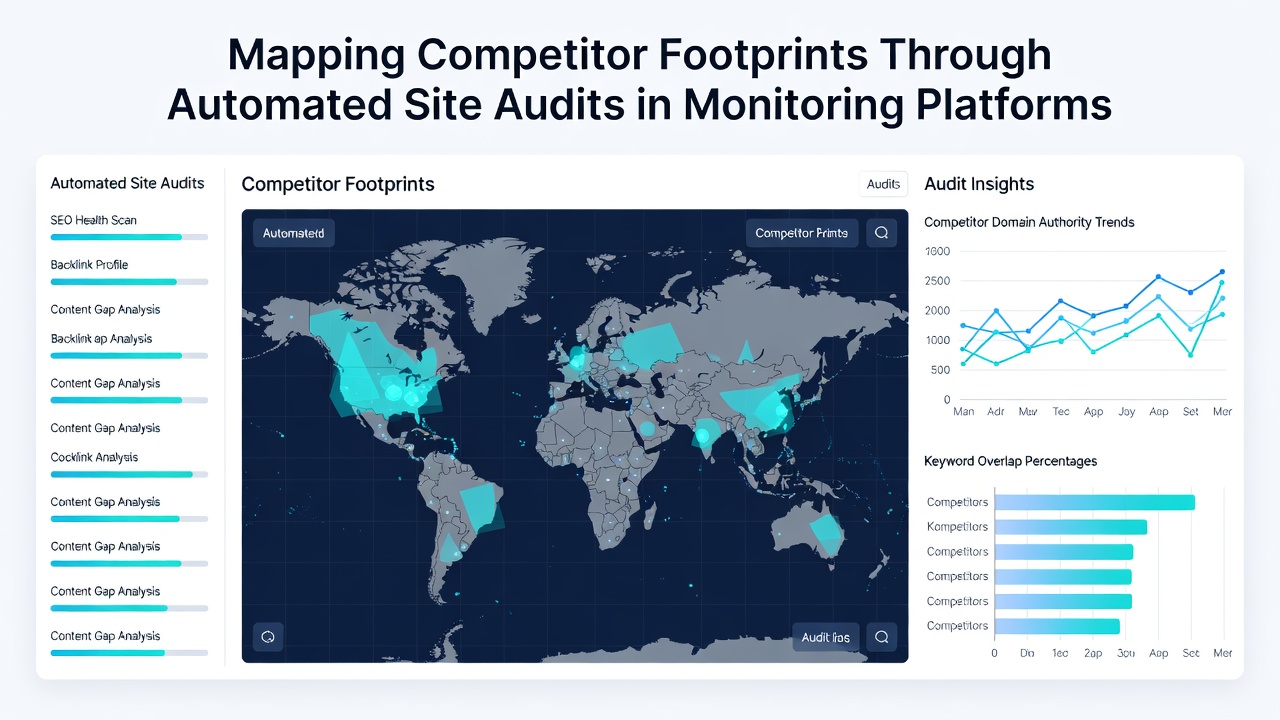
Automated site audits have become central tools for organizations that track competitor activity across digital landscapes, and monitoring platforms now combine crawling technology with structured data analysis to reveal patterns in how rivals structure their online presence. These systems scan multiple domains at regular intervals, capture changes in page layouts, content hierarchies, and technical configurations, then compile the results into visual maps that show where competitors concentrate their efforts.
How Automated Audits Capture Competitor Data
Monitoring platforms deploy crawler agents that follow links, record response codes, and extract metadata from competitor websites while respecting robots.txt directives and rate limits set by site owners. The process identifies page templates, navigation structures, and schema markup implementations that signal strategic priorities such as product categorization or regional targeting. Data collected during each crawl cycle feeds into databases that compare current snapshots against historical records, highlighting additions or removals of content sections.
Researchers at institutions focused on web measurement have documented how repeated audit cycles produce longitudinal datasets that reveal seasonal adjustments and campaign launches. One study tracked several e-commerce domains over twelve months and found that structural changes often preceded measurable shifts in organic visibility within specific market segments. Platforms surface these correlations through heat maps and timeline views that allow analysts to isolate which page modifications coincided with ranking movements.
Integrating Audit Outputs with Competitor Footprint Analysis
Once raw audit data enters the monitoring system, algorithms cluster similar page types across competing domains and generate footprint diagrams that illustrate overlap in topic coverage and technical optimization choices. Analysts review these diagrams to identify gaps where a competitor has not yet deployed certain content formats or structured data elements. The same outputs also flag shared hosting providers, content delivery networks, and security certificates that may indicate infrastructure partnerships.
September 2026 marks the scheduled rollout of updated crawling standards from several standards bodies, and monitoring platforms have begun preparing compatibility layers that will maintain data continuity while accommodating new robots exclusion protocols. Organizations using these platforms report that preemptive configuration testing helps avoid gaps in competitor tracking during the transition period.

Practical Applications in Ongoing Monitoring
Teams responsible for competitive intelligence schedule recurring audit jobs that focus on priority domains and subdirectories most likely to contain strategic content. Results feed into dashboards that compare keyword density across competitor pages, surface duplicate content issues, and track implementation of new schema types. When a rival introduces a fresh product category or regional landing page, the monitoring system registers the change within the next scheduled crawl window and alerts designated users.
Case examples from research groups show that companies combining automated audits with manual verification reduce the time required to detect competitor site redesigns from weeks to days. One documented instance involved a retail brand that identified an early shift toward video embeds on competitor product pages, allowing the organization to adjust its own content calendar before similar patterns appeared in broader industry reports.
Data Quality and Compliance Considerations
Effective footprint mapping depends on consistent crawl frequency, accurate parsing of dynamic content, and proper handling of JavaScript-rendered elements. Platforms address these requirements through headless browser integration and configurable user-agent strings that mimic standard visitor behavior. At the same time, operators must align audit practices with regional data protection frameworks that govern automated access to publicly available web resources.
Industry reports from organizations such as the Office of the Australian Information Commissioner outline expectations around respectful crawling practices, and monitoring platforms incorporate configurable delay settings and request throttling to remain within acceptable operational boundaries. Academic papers from European research networks further examine how audit frequency influences data freshness and the reliability of footprint visualizations derived from those datasets.
Conclusion
Automated site audits within monitoring platforms provide structured, repeatable methods for mapping competitor footprints by capturing technical and content changes across multiple domains. The resulting datasets support comparative analysis that reveals strategic patterns without requiring constant manual intervention. As standards evolve in September 2026 and beyond, platforms that maintain flexible crawling configurations will continue to deliver consistent visibility into how competitors structure their online assets.