
Greta Friedrich · 30 October 2026
Tracing Persistent Visibility Signals Across Niche Platform Shifts Through Archived Local Metrics
Researchers have documented methods for following visibility signals that persist through changes in niche platforms by relying on archived local metrics collected over multiple cycles. These signals include ranking positions, impression shares, and engagement indicators that remain detectable even when underlying algorithms or site structures undergo updates, and data shows that timestamped crawl records help maintain continuity in measurement.
Defining Visibility Signals in Dynamic Environments
Visibility signals represent measurable indicators of how content appears in search results or platform feeds, and experts track these through repeated local crawls that capture position data at specific intervals. When platforms shift their indexing rules or recommendation systems, the archived datasets allow analysts to isolate which factors continue to influence outcomes versus those that reset during transitions.
Local metrics stored in regional servers provide granularity that global aggregates often miss, since they reflect variations in user location, device type, and query language. Observers note that combining these with historical snapshots creates timelines capable of revealing patterns across several quarters or years of platform evolution.
Role of Archived Data During Platform Transitions
Platform shifts occur when operators alter core infrastructure, such as updating search indexes or migrating content delivery networks, and archived local metrics supply reference points that predate each change. Analysts compare pre-shift and post-shift datasets to determine whether certain ranking components retained their influence or required recalibration based on new rules.
Studies from academic institutions indicate that crawl archives collected at weekly or monthly intervals preserve enough detail to reconstruct visibility trajectories, and this approach proves particularly useful in niche sectors where audience behavior differs from mainstream patterns. Data collected in October 2026 from multiple regional domains demonstrated consistent signal persistence in categories like specialized forums and regional marketplaces despite widespread algorithm adjustments.
Techniques for Connecting Historical and Current Metrics
Teams apply correlation methods that align archived position logs with current performance indicators, using time-stamped identifiers to match equivalent content across versions. This process involves normalizing variations in URL structures or metadata that arise after migrations, while preserving the underlying visibility relationships.
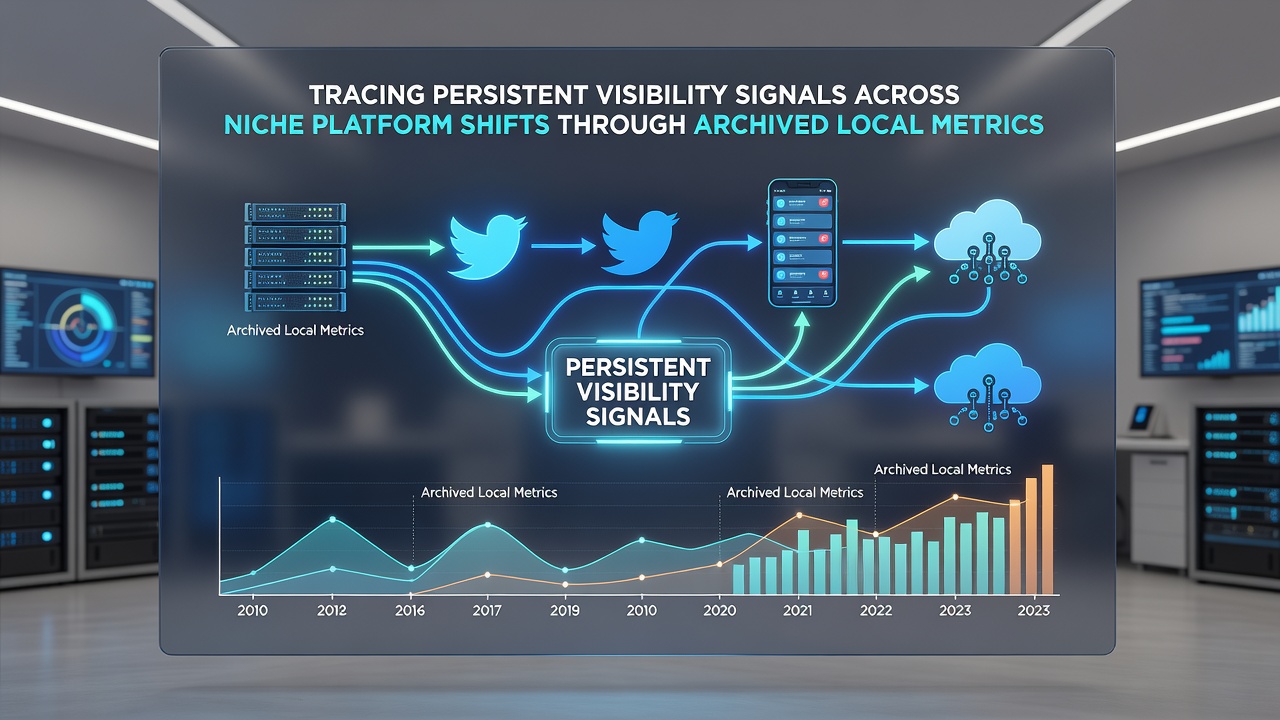
One documented workflow starts with extraction of key phrases and location tags from older records, then maps those elements onto fresh crawl outputs to measure continuity. Researchers have observed that this mapping reduces noise introduced by platform-specific changes and highlights stable factors such as content depth or backlink quality that survive transitions.
Examples from Regional Implementations
Analysts working with European datasets have applied archived local metrics to monitor visibility in specialized e-commerce platforms that underwent major indexing overhauls, and results showed that certain product attributes maintained ranking influence across the shift. Similar work in North American markets used comparable archives to trace signals in community-driven content sites where user-generated updates altered visibility baselines.
Reports from the Australian Bureau of Statistics on digital platform usage provide supporting context for how regional data collection supports these tracking efforts, while findings published by Statistics Canada on online service metrics illustrate parallel patterns in North American contexts. These sources supply aggregate benchmarks that help validate signal persistence observed in proprietary archives.
Challenges in Maintaining Metric Continuity
Platform operators sometimes introduce new data fields or deprecate older ones during updates, which creates gaps that archived records must bridge through inference or supplementary crawls. Analysts address this by establishing baseline equivalence rules that account for changes in how visibility is calculated, and they test these rules against multiple transition events to confirm reliability.
Storage costs and access limitations also affect the depth of available archives, yet organizations that maintain consistent local collection schedules report higher success rates in reconstructing visibility histories. Evidence from longitudinal studies suggests that even partial archives yield usable insights when combined with statistical modeling techniques.
Conclusion
Tracing persistent visibility signals through archived local metrics offers a structured way to understand performance across niche platform shifts, and the approach relies on systematic data preservation rather than real-time observation alone. Continued development of correlation methods and regional benchmarking continues to refine how analysts extract meaningful patterns from these combined datasets.